In Honour of Remembrance Day

In Flanders Field
by John McCrae

In Flanders field the poppies blow
Between the crosses, row on row
That mark our place; and in the sky
The larks, still bravely singing, fly
Scarce heard amid the guns below.

We are the Dead. Short days ago
We lived, felt dawn, saw sunset glow,
Loved and were loved, and now we lie
In Flanders fields.

Take up our quarrel with the foe:
To you from failing hands we throw
The torch; be yours to hold it high.
If ye break faith with us who die
We shall not sleep, though poppies grow
In Flanders fields.

Poem's Origin
The areas of Northern France known as Flanders and Picardy, saw some of the most concentrated and bloodiest fighting of the First World War.

There was complete devastation. buildings, roads, trees and natural life simply disappeared. Where once there were homes and farms, there was now a sea of mud, a grave for the dead where men still lived and fought.

Only one other living thing survived. The poppy, flowering each year with the coming of the warmer weather, brought LIFE, HOPE, COLOUR and REASSURANCE to those still fighting.

In 1915, John McRae, a doctor serving with the Canadian Armed Forces, was so deeply moved by what he saw that he scribbled the verses in his pocket book.

________________________________________________________________________
In hono[u]r of Remembrance Day, our staff in both VIA offices have been wearing poppies for the last week.

Vancouver Office Staff:


Seattle Office Staff:

The Salvation of our Environment Lies at the Feet of the Poor

by Jihad Bitar, Planner for VIA Architecture
After three days of intensive lectures and presentations about the environment, climate change, ecology, economy, development, theories, corporate progress and grass root success example at the Gaining Ground Summit under the theme of ‘Resilient Cities, Urban Strategies for Transition Times’, there were a lot of messages flying through the air at the Canada Place ballroom. Yet, at the end of it all, I grew rather depressed reading all the data and equations of how long we humans have on earth before we totally destroy it.

In the midst of this ‘Smart’ jungle, I was reminded of a great message from Paul Hawken’s speech and lecture. When asked whether he is an optimist or a pessimist about the future, he replied with what became his most famous quotation: “If you look at the science about what is happening on earth and aren’t pessimistic, you don’t understand data. But if you meet the people who are working to restore this earth and the lives of the poor and you aren’t optimistic, you haven’t got a pulse.” And then Hawken later used the word ‘heart’.

For me, I like to think of myself as a scientist with a heart, which by Hawken’s definition, makes me a pessimist-optimist. But when I thought of Hawken’s words, the scientist side of me linked Hawken’s inspiring ideas to Hernando De Soto’s theory which talks about giving the poor full rights over the illegal properties they live on as the first step toward a better future for us all.


These two ideas may sound different at the beginning but, in my humble opinion, when we link property rights and social justice with sustainability and green development; we are actually working towards greater social justice for the people who need it while simultaneously developing their neighborhoods into a safe and sustainable environment. This is the very soul of the current global movement of sustainability and what it means to be green. We must be just and fair to everything around us: air, soil, plants, animals and, above all, humans.

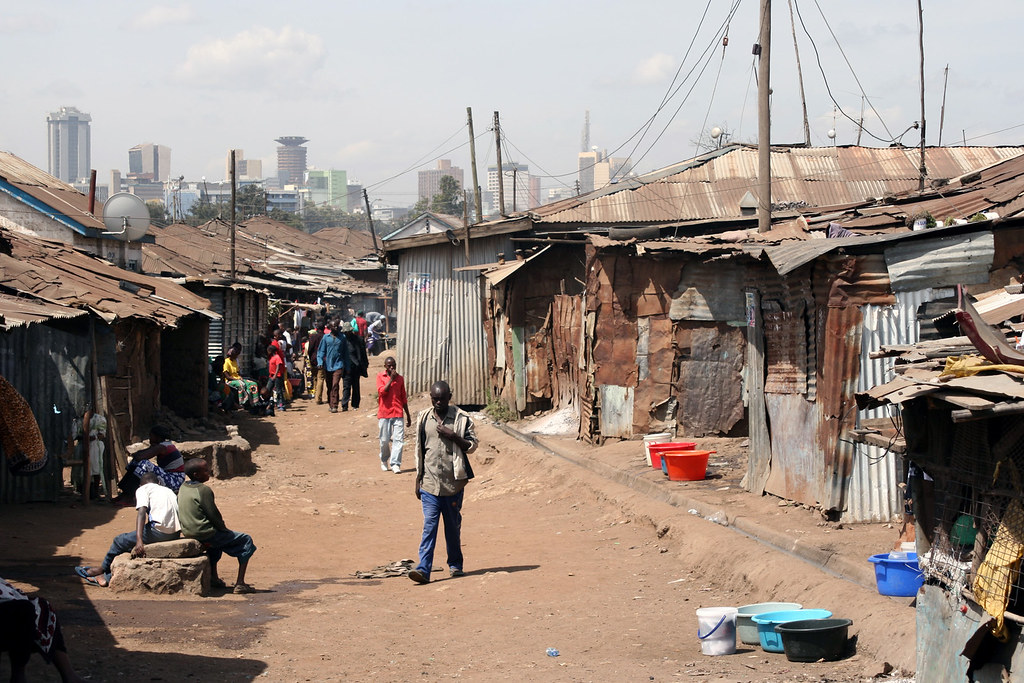
Think about it, the majority of the development we have today is happening only for a lucky few of us who have access to credit and proper basic services like energy and water. Meanwhile, the majority of the population continues to live in poverty in highly polluted and highly concentrated environments.


Do we dare imagine that we are contributing to world-wide social justice and cleaner environments when only a small percent of the world’s population reap the benefits? And of that small minority only roughly 5% are consciously taking measures to be environmentally friendly? How can we achieve the goals we set for our planet if we don’t include the majority of us – the poor – into our plans?

My straight answer is – we cannot. Period.

Regardless of how much we recycle and build green; or how much we develop and force corporations to do their clean duty; or even how much we try to produce environmentally friendly materials and programs; it is all fruitless if the majority of us humans don’t or can’t participate in the global movement.

Therefore, we must address the issues of poverty in order to tackle the problems with our environment.

To further illustrate this, I would like to give a short and quick explanation of De Soto’s theory.

It explains that unregistered properties have no proper ‘value’ attached to that land. For instance, if a person were to take an unregistered piece of land, build on it and use it, the property will still have no value because it is not officially legal. If this person decides to sell their developed land to someone else, there is no proper documentation that can connect this person to that property or transfer the property title from one name to another. Therefore, anyone or any government can simply take the land at any time because it is not properly registered and push those people outside without any legal protection for them. As a result, these properties are entered into the ‘shade’ or black market and are not accounted for in the official market.

In order to grasp the magnitude of this problem, we need to multiply this one property by a million to understand that entire neighbourhoods, communities and even villages that have residential, commercial, industrial and agricultural value currently exist only on the black market. And since these groups are not officially recognized on paper, they do not have any official value to support them in the real market.

So the first step we need to take to get these ‘shade’ properties into the market is to connect each property to its owner and then help them enter formal markets. There, they can retain official value of what they own and have the ability to engage in real business or apply for legitimate loans and credits without fear from any person, organization or law that may have intimidated them before.

Yet before we can implement such a theory, where it is needed, and for it to work properly, several supporting steps need to take place. This includes remedial action such as fixing political problems and fighting corruption, as well as providing awareness and incentives for environmental improvement and sustainability. We also need to factor in the cultural, traditional and custom layers into the property right laws to discourage any corruption among the poor. We simply want to make business easier to do in these communities instead of killing it.

Educating the poor about property rights and then teaching them to be responsible land owners and showing them how to incorporate green practices into their daily lives would be our best contribution to help slow down climate change. Meanwhile, we must also continue pushing corporations to do their share by conducting more research and finding new ways to clean up the earth- an earth that includes everybody, even the poorest of us all.


Majora Carter, one of the speakers at the Smart Growth Conference, shared with us her success story about bringing justice back to her own neighborhood of South Bronx, New York. Carter worked with her community to improve their run-down neighborhood by treating polluted areas, planting parks and building community centres that introduced education programs to help improve community wellbeing.

Yes, we must educate the poor. Yes, we must improve their corrupted systems. And yes, we have to introduce a democracy to them in the way that works for the main goal and not to our western standards. I believe that we can achieve it all by connecting theories and working with organizations that have clear visions and passionate people who work hard for their community. This is the key to slowing down environmental deterioration and it is for this reason I have chose the title to my article.

I started my post with Paul Hawken and now I will close with him saying:
‘Working for the earth is not a way to get rich, it is a way to be rich’


Image Sources: Gaining Ground, Paul Hawken, Power of the Poor, Poverty, Majora, Flowers

Cities Stand Together in the “New Normal”

by Lydia Heard, VIA's Urban Planner

On October 14th, a Mayor and Managers Summit was held in Redmond, organized by NextGen Today, in partnership with the attending communities, and hosted by Redmond Mayor John Marchione and Kirkland City Manager David Ramsay. The attendees were representatives of towns and cities ranging from 1,000 to 85,000 residents, from strong mayor to mayor-council-manager governance, from 85% residential base (Maple Valley) to twice as many jobs as residents (Redmond). Some had administrations with paid staff support; others had mayors who essentially volunteer their terms of civic service and receive a stipend for their labors. All were facing similar and urgent challenges and seemed truly hungry for the opportunity to hear from their fellow civic leaders what issues they were dealing with, and the solutions and best practices that they might share.

Focus on Funding
The morning session was titled “Navigating the Turbulent Waters” and began with attendees describing where they felt their city budgets were – above water, treading water, or underwater. Many were trying to find funding for capital projects (infrastructure). Funding was uppermost on everyone’s minds. There was much discussion about I-1033 along with the worst-case assumption (at the time) that it would pass, and that voter tax referendums are now the “New Normal.” There was dismay over the raiding of the Public Works Trust Fund this year to make up state budget shortfalls. There was stated interest in asking the legislature, once again, to change the constitution to allow for TIF (Tax Increment Financing) funding for infrastructure, affordable housing and transportation. There was much discussion of Levy Lid Lifts (involving the 2001 limit on property tax increases) to make up budget shortfalls. There was talk about local Tax Benefit Districts, and local car tab taxes (MVET).

The New Normal, it was generally agreed, was a move away from voters as “citizens” to voters as “consumers,” who are more likely to vote to tax themselves for specific local benefits rather than for a more general, widespread common good. This seems to entail a move away from general funds towards specific funding levies. Voters will be more likely to vote for tax measures for visible, tangible benefits such as Parks and Public Safety – but who wants to pay for things like “Administration” or such an esoteric good as “Planning”? Each Tax District represents a new bureaucracy with its own costs. Each election for a voter referendum generates its own costs. How are the elections that will be necessary in the New Normal to be funded? The general agreement was that the present funding structures – from property taxes, sales taxes, B&O – are not sustainable. There is a need for long-term funding structures, and that will require state legislative attention.

Smaller cities are pressed to create partnerships with each other, to consolidate services, to put services into a separate taxing district. This causes some consternation over preserving local identity – but cities are not the services they provide; they are the embodiment of a shared local vision of aspirations for the future. Partnerships, rather than special districts, may provide economies of scale while retaining a sense of local control. There are different models for consolidation. In this gathering the civic leaders expressed a desire to learn from each other what they have done in this regard, perhaps in workshops to share best practices.

Local Community Vision: Transportation and Land Use
The afternoon sessions dealt with transportation issues from the statewide scale of connecting cities, as addressed by WSDOT, to transportation and land use visions, practices and innovations at the local and regional scale. WSDOT is focused on providing connections between cities; many planned improvements to this end were left unfunded when the 2007 RTID (Regional Transportation Investment District) failed. Rural communities have a sense of inequities from the PSRC 2040 vision for growth. Smaller communities such as Maple Valley, Black Diamond and Carnation band together to buck this perceived trend and are working to put together their own commuter rail line.

Where statewide responsibilities leave off, local governments require a vision and a strategy for what they want to achieve. Nothing can be done without funding, but the danger of a focus on narrow funding channels is in loss of vision and of larger planning issues. Communities and cities have their own context for a vision of land use that then sets the context for highway and transportation improvements.

Redmond, for example, was once a single-family bedroom community that was required to become a growth center under the GMA. They invested in the infrastructure downtown, to encourage development there. They have a vision for a better housing to jobs balance and for diversity in housing choices. They also have a vision for overall connectivity and for the eventual arrival of Sound Transit, and it is part of their planning. They have prepared for dense centers around proposed stations and are ready for it to happen. Redmond also organized as one large traffic concurrency zone in order to accommodate a citywide bicycle network.

Parking Management is also an issue. Strategies such as lowering parking requirements, giving developers the option of providing transit passes instead of parking, using shared parking arrangements, and other tools that the different communities are trying were discussed. SeaTac offered a land use test case. They have two transit stations going in, along with a huge demand for airport parking, making surface parking lots more lucrative than other commercial or retail uses. They have to subsidize retail in order to promote mixed-use development around the transit stations, which are there to serve the airport rather than the community. Parking, land use and transportation overlap and require a strategy that changes over time.

The issue of Transportation Impact Fees came up. They can only be used to pay for vehicle infrastructure; how might that funding be used to pay for bicycle and pedestrian facilities? Redmond has done something very innovative in this regard. Instead of Transportation Impact Fees, they charge Mobility Impact Fees and have developed Mobility Units to measure charges and credits. For example, if a developer puts in bicycle infrastructure, they get back some mobility credits to offset mobility fees. It’s never been tried before and is something of an experiment. So far, no one has challenged it.

The challenges faced by cities in the New Normal, even condensed into the discussions of a single day, seem staggering. Questions of funding ruled the day; but vast reserves of resourcefulness and innovation were very evident. Land use and transportation, tools such as parking management, transportation concurrency, commute trip reduction, service partnerships, and entirely new innovations through merely substituting “mobility” for “transportation” provided  much to work with. The greatest benefit among civic leaders seemed to be the recognition that, in sharing the issues they face, they are also sharing potential solutions – and not bearing the burdens entirely alone.